

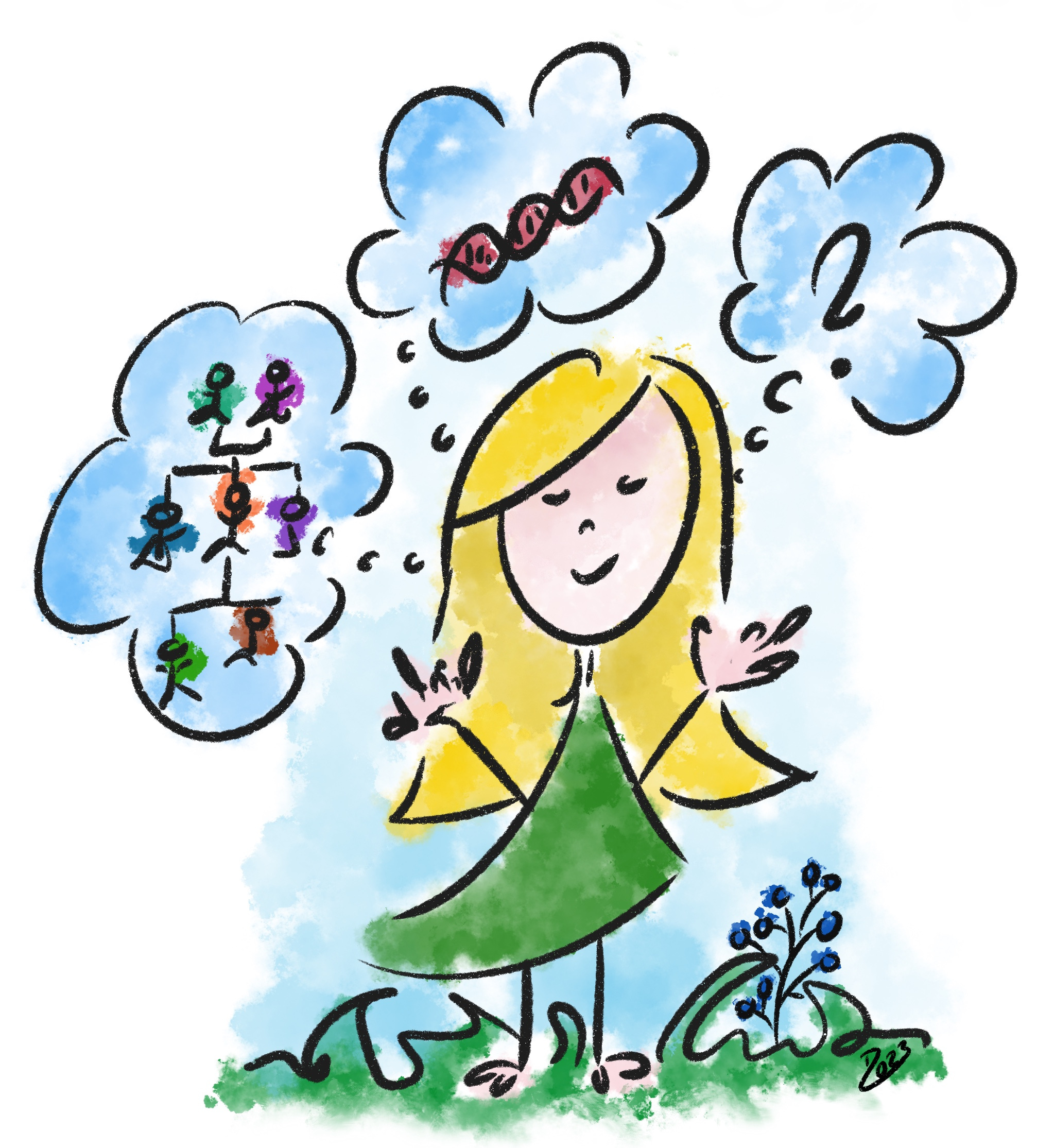
It has been a long time since I wrote about disabilities, so I decided to throw out another piece about it, with the specific topic of weather it is okay to ask someone about their disability or not.
As an example & to illustrate the complexity of this topic: if you would ask me, I would be happy to explain you about my disability.
If you would ask my dad, he would brush you off, mumble something about the Vietnam war & potentially get very irritated. But also, you might not even notice his disability, cos he generally hides it ;).
There we go! The answer to this question is: it is complicated :D
Buuuut, and there is a big BUT, because it doesn’t mean that you should never ask someone about their disability. So I decided to provide some nuances and potentially guidelines about this whole, sensitive topic.
I will not dive deep into the official diagnosis of what “disability” is. Because if you would ask me, who is officially 50% disabled, I would say that many people with crappy behaviours, an immense ego & shitty attitudes are more disabled than me.
Neither will I debate weather the word “disability” is insulting & should be “differently-abled” or some other type of nit-picky word-reframing. I am convinced that words are important and matter, but there is a boundary which I will just not cross.
Instead, I will speak from my own personal experience of what disability is. So you will get my perspective on the topic & can decide what you want to do with it, or not :)
I have what is called Ectrodactylie, or Split-Hand & -Foot malformations. Its a dominant, genetic mutation on chromosome 3 and I inherited it from my dad. It is a very visual disability, because my hands look like that:
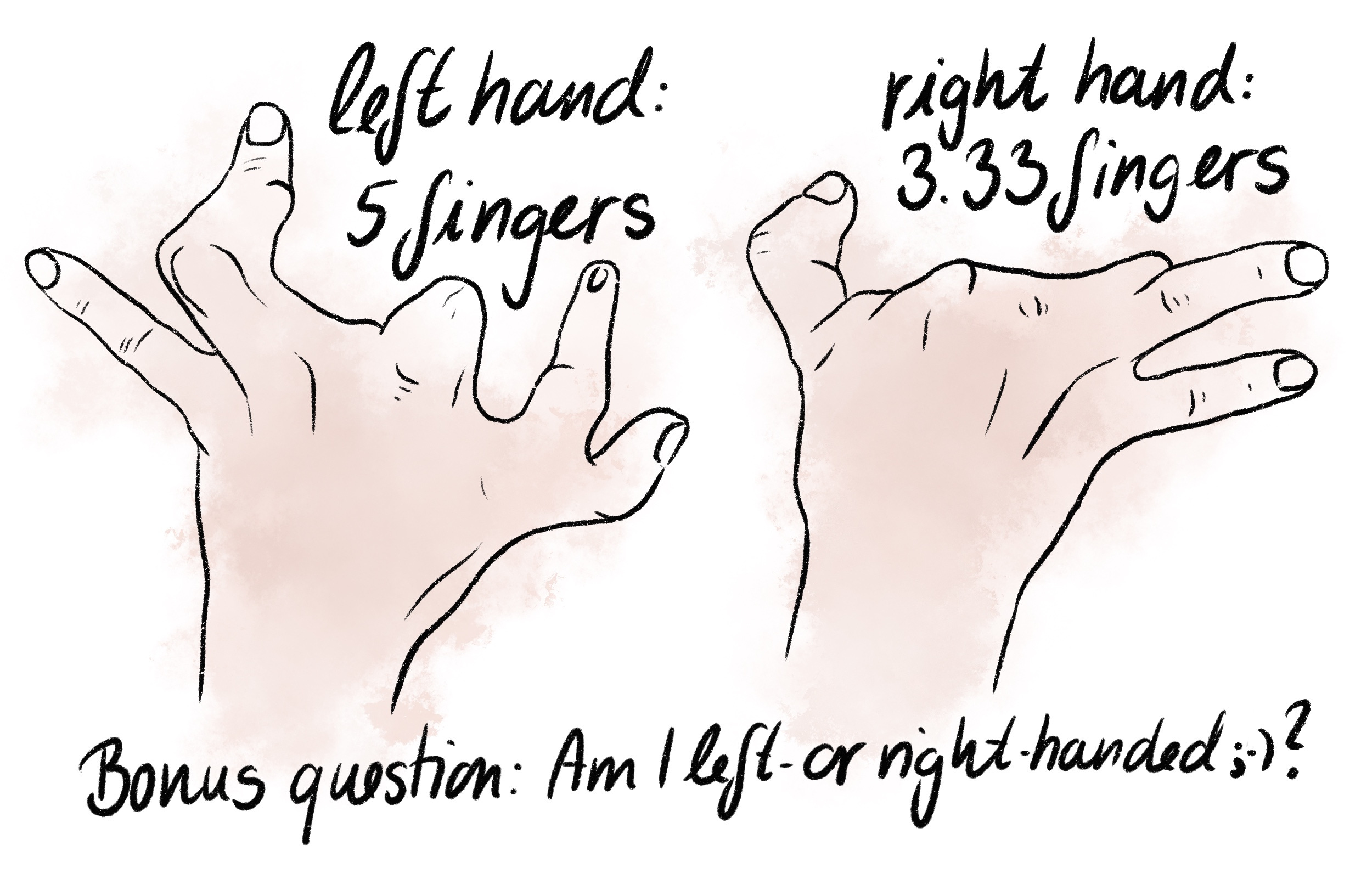
I also have differently formed feet, with a big toe and a small toe on each foot. Soo, it is rather obvious, because I look different from every 10-fingered human being on earth.
Now, can you ask me about it? Hell yes! I will gladly explain you the whole story around it, because there is actually a lot to tell! I see it more like opening peoples eyes to a different world and teaching them about what other things exist. It is quite fascinating to be honest. And I also don’t have a problem with my disability.
Would everyone explain you their disability story? Nope.
Why could that be the case? Because they feel shame, discomfort, guilt, don’t care about it or don’t know you enough.
Also: because maybe you feel entitled to do it, maybe you ask in a rude way, maybe you laugh and ridicularize them. All this can be felt & perceived ;)
If a random stranger on the street or in the train would blurt out to me: “YO! What’s wrong with your hands? Why do they look so weird?” I would laugh & say something along the lines: “What is wrong with your head? Have you lost your mind?” and move on with my life.
If someone who is more self-conscious about their visible disability & feels ashamed about it, they might feel really hurt and bullied.
While no one should ever deliberately hurt other people, we can’t control others behaviors, so the only thing to do is to work on our self-confidence and stand above such people.
I told you to share some guidelines and thoughts about this whole asking-a-disabled-person about their disability, so here they come:
Consider how well you know them & what type of relationship you have
Think about a calm & polite way to ask them
Reflect upon your reasons why you want to do it
Find a suitable moment where both of you feel comfortable
If it is a stranger: pay very close attention to their body language, mimics, gestures, overall movement and behavior. If they seem shy or insecure, its better to not even ask. Check it on google or discuss with your favorite AI tool ;).
If it is a stranger & they seem open & not bothered by their disability, you got some eye contact & smiles, they might be fine to share their story with you, if you ask in a respectful and kind way.
I think that is it for general guidelines.
If it comes to the specifics: for example, if you are a parent with a disabled child and you see someone with a similar disability, this could be your connection point in asking & expanding your network of people who potentially know something else than you (doctors, carers, tools, tips & tricks), or are part of a community you would want to join.
Then you could also be a co-worker, a friend, a romantic partner etc. All what I said before applies to these types of connections too: the quality of your relationship often determines how far you can go. And the intent on where you want the relationship to develop into also counts a big deal!
I will share some personal, very surprising facts with you: I was never bullied on my disability and barely anyone asks me about it. From all kinds of relationship-states.
What I hear the most as reasons for this is:
“I didn’t even notice!” (and we worked close to each other in the lab for 2 months. She then didn’t even bother to ask anymore, would have felt weird to her. I also am not bothered by my hands & behave normal.)
“It doesn’t matter to me.” (all kinds of people, friends, coworkers, partners)
Those are the two most common reasons, but the majority of people doesn’t say or ask anything, ever.
Those that ask most often are children :D. They also touch my hands, ask why this is & move on. Or they just look and touch. Parents that notice it, often get uncomfortable, but I love to explain to the children why this is. I usually try to pick up on something that is the same in them and one of their parents and tell them “It’s like you got the blue eyes from your dad, I got these fingers from my dad.” Done, case closed.
If it is strangers that ask me, or regular people I dance with, I will give them the short version of the reason. No need to deep-dive into it. Well, unless they ask and show more interest.
The longer version and story about my disability is much more fun & my family knows it, my high school teachers and also some of my friends. Oh, and whoever read two of my early posts that I wrote here on Substack :)
In my life, there was usually not much that bothered me around my disability, apart from that I felt ashamed of my feet more than my hands. But one bigger thing was, when my boyfriends didn’t ask me about it.
In my past, I almost felt hurt and felt that “they don’t care about knowing it”. Which in a way is a great thing, because they never cared. It simply didnt matter to them and this is just brilliant, because it shows that these things truly do not matter.
But in my head, on the other side of things, I felt that they were not interested in that part of me, in that part of my life-story. And it is an important part of my life story, just knowing it.
Once, one ex of mine and I sat on the porch and talked about something I don’t remember anymore. Somehow the topic turned towards children and my disability and he said something like: “Well, I talked with my mom about it and we figured that one can always consult doctors about it and do surgeries.”
Boom!
This was not the main reason why we broke up, but this type of a statement was a great representation of the miscommunication issue we had.
Not once did he think to talk with me, his girlfriend about it; neither did he know about my story with surgeries in my life, nor my take on it; neither the risks and benefits, nor the potentials and pitfalls. Instead of asking me about this topic & get to know my experience and this part of my life-story, he came to this absolutely ridiculous conclusions with his mom…
SO! Romantic relationship fact: ASK! Ask the person you are romantically involved with everything! And I mean it: EVERYTHING!
Because asking means being interested, wanting to know about the other person you share your life with, even if it is for just a while.
There is a very clear differences in my perspective weather you are best friends i nthe word & know each other from childhood & never asked this, vs finding a potential life partner and never asking this question.
It is about getting to know the person you want to spend your life with, as best as possible. We all have experienced tons of things in our lifes and they shaped us, all of them. And if we want to know someone, its best to ask and show interest and not just assume that they will randomly tell you whenever they want to.
Even if we ask a question, or get asked something, we have the choice to refrain from answering. We have free will to do that and the other person can choose how they react to this as well.
From what I observe in the world, people and relationships, I have the feeling that asking, true & deep listening, and processing all that is something essential for a thriving relationship. And unfortunately, often not happening.
In this disability case for me & my family, I know my dad has an issue with his disability & that he inherited it to his children. He doesn’t want to talk about it, he avoids it. If he is asked about it, he brushes it off.
This shows a lot about him and who he is and how he feels. Same for me: I am fine with telling you about it when you ask, which shows I have no obvious issue with it.
…I somehow feel that I deviated a bit from the topic of disability and diving into interpersonal relationships… but it is connected!
Because the closer you are, or let’s say: the closer you want to be with someone, the more asking and listening and sharing is important. About everything!
And no, we don’t immediately have to dump all our emotional issues on someone we get to know. But a slow building of a relationship includes opening up with time and asking and sharing. To get to know each other and connect on a deeper level.
You know, if I look at it from the outside: it is very vulnerable to be in the world and look different. It can shape us in all kinds of ways and wanting to get to know about this aspect of a person who is close to you is nothing bad. On the contrary, it shows emotional maturity, care, compassion and trust.
And honestly: we need more of that in this world. A lot more!
So, I will end with: if you ever meet me in person, in real life on the street, or online: never hesitate to ask whatever you want to ask about this topic! I will be happy to share with you & give you tips on how to handle a situation like that in your life, if you wish so!
I hope you have a wonderful Sunday!
Love,
Daria
